

Explore All Blogs | Insights on Smart Toilets & Bidets
Bidet water filtration: hygiene, comfort & eco benefits
Most homeowners assume tap water is clean enough for a bidet. After all, it’s the same water you wash your hands with. But tap water across the U.S. regularly contains chlorine, sediment, dissolved minerals, and in some regions, trace bacteria. These impurities don’t just affect taste or smell. They affect your skin, your bidet’s nozzle, and how long your unit lasts. Filtration is one of the most overlooked upgrades in the modern bathroom, yet it delivers real, measurable improvements to hygiene, comfort, and sustainability.
Table of Contents
- The science behind bidet water filtration
- Why impurities in tap water matter for bidet users
- Filter types, installation, and maintenance: What homeowners should know
- Eco and comfort benefits: Filtration’s impact on your lifestyle
- Balancing expert opinions: Do all bidets need filters?
- Summary and actionable steps for U.S. homeowners
- Explore premium bidet solutions for optimal hygiene and comfort
- Frequently asked questions
Key Takeaways
| Point | Details |
|---|---|
| Improved hygiene | Bidet water filters remove harmful impurities for a cleaner, healthier bathroom experience. |
| Bidet longevity | Filtration prevents mineral buildup, reducing maintenance and repairs for lasting performance. |
| Eco-friendly benefits | Filtered water cuts toilet paper use, supporting sustainability and reducing waste in your home. |
| Enhanced skin comfort | Filtered water is gentler on sensitive skin and minimizes irritation compared to unfiltered tap water. |
| Regional necessity | Filtration is particularly important in U.S. areas with hard water or poor tap quality. |
The science behind bidet water filtration
Tap water travels through miles of pipes before reaching your home. Along the way, it picks up sediment, chlorine added during municipal treatment, dissolved minerals like calcium and magnesium, and occasionally bacteria or viruses. When that water hits your bidet nozzle, every one of those impurities comes along for the ride.
Bidet water filtration removes impurities, including sediments, chlorine, bacteria, and other contaminants from tap water, ensuring cleaner and more comfortable cleansing. There are four main filter types used with bidets: inline filters, sediment filters, activated carbon filters, and UV filtration systems. Each targets different threats.
Key fact: Activated carbon filters can remove up to 99% of chlorine from tap water, while multi-stage systems combine sediment and carbon filtration for broader protection.
Here’s a quick comparison of the most common filter types:
| Filter type | Contaminants removed | Installation ease | Avg. cost |
|---|---|---|---|
| Inline filter | Sediment, chlorine | Very easy | $15–$40 |
| Sediment filter | Particles, rust, debris | Easy | $10–$30 |
| Activated carbon | Chlorine, odors, VOCs | Easy | $20–$50 |
| Multi-stage filter | Sediment, chlorine, bacteria | Moderate | $40–$100 |
| UV filtration | Bacteria, viruses | Moderate | $80–$200 |
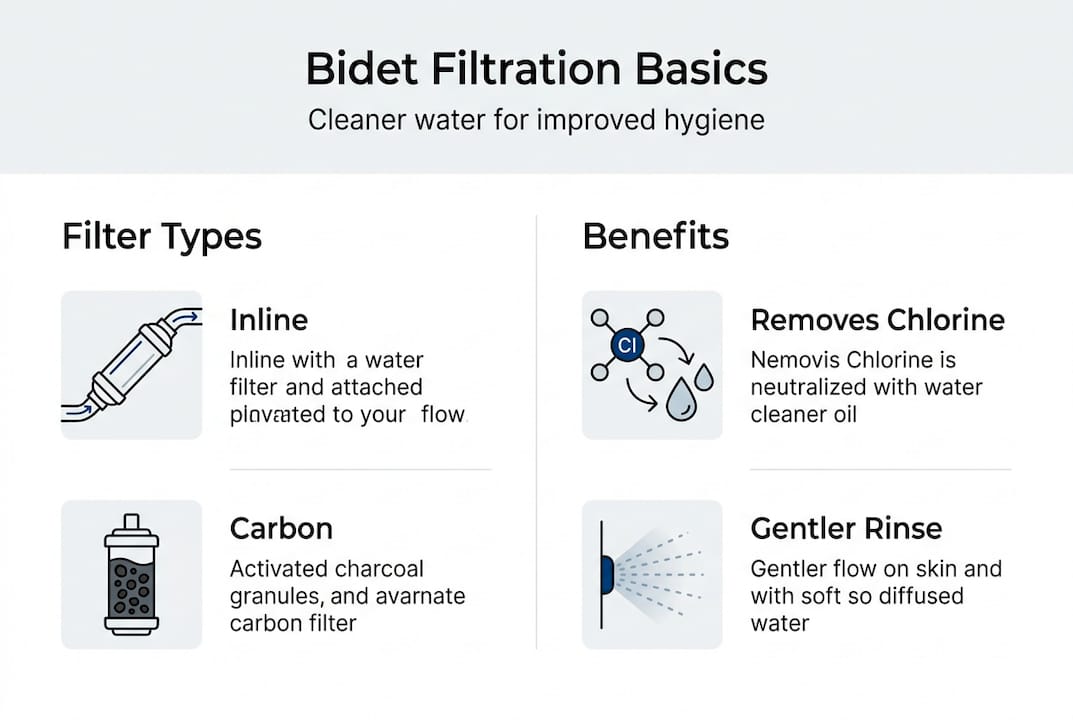
It’s worth noting that filtration primarily enhances comfort and protects your bidet hardware. The hygiene advantages of bidets are well-documented, and adding filtration builds on those gains by delivering cleaner water to sensitive skin. Experts note that while bidet hygiene evidence supports comfort improvements, filtration is not a substitute for medical-grade sterilization. Think of it as a meaningful upgrade, not a cure-all.
The bidet benefits you already enjoy get amplified when the water itself is cleaner and gentler.
Why impurities in tap water matter for bidet users
Understanding filter function helps us see why tap water impurities should concern you as a bidet owner. Hard water is one of the biggest culprits. It’s water with high concentrations of calcium and magnesium, and it’s extremely common across the U.S. Midwest and Southwest.
Hard water affects your bidet in three key ways:
- Mineral deposits build up inside nozzles, reducing spray pressure over time
- Scale accumulates on internal components, shortening the unit’s lifespan
- Unfiltered chlorine and minerals can irritate sensitive skin during cleansing
Filtration prevents mineral buildup from hard water, which clogs nozzles and reduces spray pressure in bidets. Without a filter, you may find yourself cleaning your bidet more often, dealing with reduced water pressure, or facing early repairs.
The health benefits of bidets extend beyond basic cleansing. For users with sensitive skin, eczema, or post-surgical needs, unfiltered water with chlorine or sediment can cause real discomfort. Filtered water removes those irritants before they reach your skin.
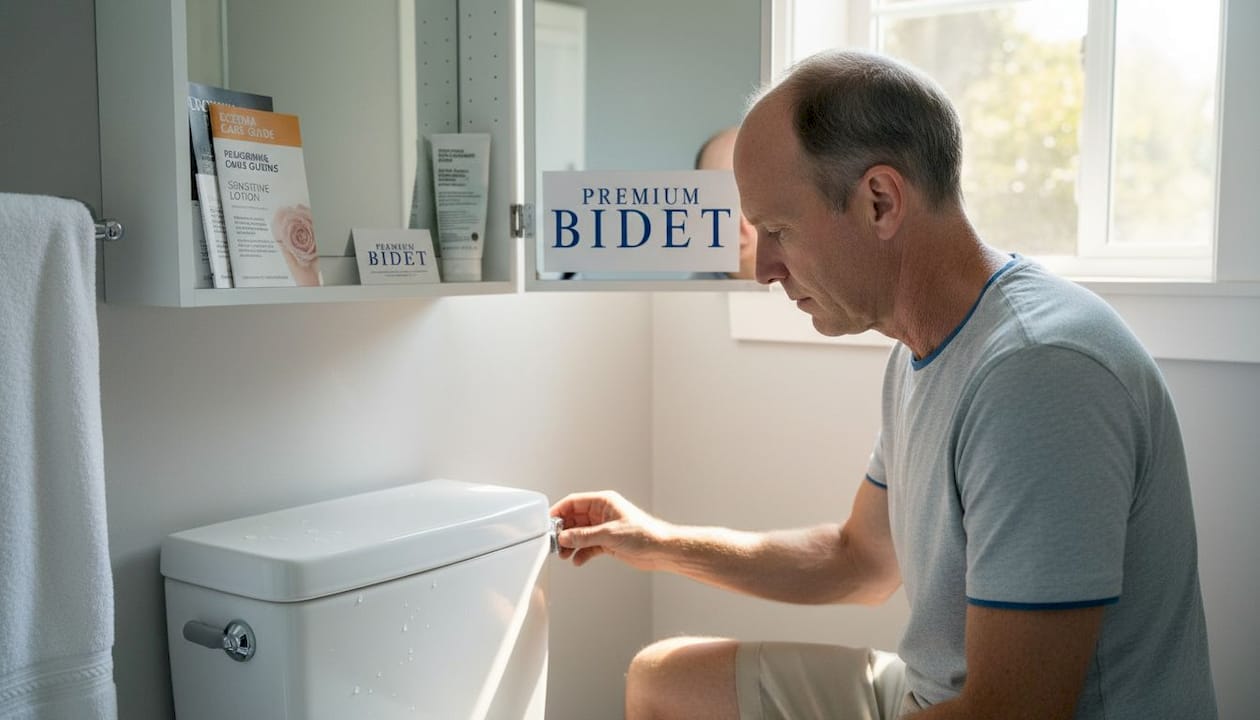
Regular bidet maintenance tips always recommend checking nozzle condition. In hard water regions, that nozzle check becomes critical. The filtration importance for bidet longevity is especially relevant if your home sits in a high-mineral-content water zone.
Filter types, installation, and maintenance: What homeowners should know
Knowing the specific threats posed by U.S. tap water, let’s get practical on filter options and care. Inline and multi-stage filters, including sediment and activated carbon varieties, are the most common choices. They install directly on the water supply line and should be replaced every 6 to 12 months.
Steps to install a bidet inline filter:
- Turn off the water supply valve behind your toilet
- Disconnect the supply hose from the bidet inlet
- Attach the filter between the supply valve and the bidet inlet
- Reconnect the hose to the filter’s outlet port
- Turn the water back on and check for leaks
- Mark your calendar for the next filter replacement
Here’s a practical guide to help you choose:
| Filter type | Best for | Replacement interval | Difficulty |
|---|---|---|---|
| Inline filter | General use, most homes | 6–12 months | Beginner |
| Sediment filter | Older pipes, rural areas | 3–6 months | Beginner |
| Activated carbon | Chlorine-heavy municipal water | 6–12 months | Beginner |
| Multi-stage | Hard water, sensitive skin | 6–12 months | Intermediate |
| UV system | Well water, bacteria concerns | Annual bulb change | Intermediate |
Not every home needs a filter. If your local water quality is consistently rated high and you live outside hard water zones, a self-cleaning nozzle on a premium bidet may be sufficient. But if you’re unsure, it’s always worth checking.
Pro Tip: Visit your local water utility’s website or use the EPA’s water quality database to check your area’s hardness and contaminant levels before buying a filter. Also confirm the filter is compatible with your specific bidet model. You can find guidance on replacing bidet filters and when to consider a full upgrade.
For ongoing care, solid bidet maintenance practices combined with regular filter changes will keep your unit performing at its best for years.
Eco and comfort benefits: Filtration’s impact on your lifestyle
With installation and maintenance clarified, let’s connect filtration to lifestyle and environmental benefits. Filtered water is noticeably gentler on skin. Chlorine, which is standard in most U.S. municipal water, is a known skin irritant. Remove it, and your cleansing experience becomes softer and more comfortable, especially for daily use.
Filtered water enhances skin comfort and prevents irritation, while also supporting eco-friendly habits by reducing the need for wipes and toilet paper. That’s a double win.
Eco and comfort gains from filtered bidet water:
- Softer water reduces skin dryness and irritation after each use
- Cleaner nozzles mean more consistent spray coverage
- Less toilet paper needed per use, cutting household waste
- Fewer cleaning products required to descale nozzles
- Lower long-term maintenance costs from reduced mineral buildup
Clean filtered water enables a thorough rinse, cutting toilet paper use by 50 to 75%, which more than offsets the minor water used per bidet cycle. When you look at bidet water savings over a full year, the numbers are compelling.
Compared to bidet vs wipes, filtered bidet water wins on both hygiene and environmental impact. And when stacked against bidet vs toilet paper, the sustainability case becomes even stronger. Tankless bidet eco benefits are also worth exploring if you want to maximize both water efficiency and comfort.
Pro Tip: Filtered water keeps bidet nozzles cleaner between manual cleanings. Less mineral residue means the self-cleaning cycle on your bidet works more effectively, extending the time between deep cleans.
Balancing expert opinions: Do all bidets need filters?
With benefits mapped out, let’s address doubts and expert advice about filtration necessity. The honest answer is: not always. Major review platforms and bidet expert reviews consistently list water filters as optional accessories rather than required components.
Not all bidets require filters. Filters are most advisable in areas with poor water quality or hard water, which is prevalent across the U.S. Midwest and Southwest. In regions with soft, well-treated municipal water, a high-end bidet with a self-cleaning nozzle may perform just fine without one.
When a filter is a must-have vs. a nice-to-have:
Must-have situations:
- You live in a hard water region (Midwest, Southwest, or areas with known mineral issues)
- Your tap water has a strong chlorine smell or taste
- You or a family member has sensitive skin or a skin condition
- You use well water or water from an older plumbing system
Nice-to-have situations:
- Your municipal water quality reports show low mineral content
- You already use a water softener in your home
- Your bidet model includes advanced self-cleaning nozzle technology
The bidet health benefits are real regardless of filtration. But adding a filter in the right circumstances takes those benefits further and protects your investment.
Summary and actionable steps for U.S. homeowners
Concluding the expert debate, let’s wrap with practical decision steps specific to your home. Bidet water filtration is not a gimmick. It’s a targeted solution for a real problem that affects millions of U.S. households, particularly those in hard water zones.
Key takeaways and action steps:
- Check your local water quality report (available from your utility provider or the EPA website)
- Identify whether you live in a hard water region using a simple home test kit
- Match your filter type to your specific water issues: sediment, chlorine, or mineral hardness
- Confirm filter compatibility with your bidet model before purchasing
- Set a replacement reminder every 6 to 12 months to maintain peak performance
- Consider the long-term savings: fewer repairs, less toilet paper, and a longer-lasting bidet
The decision criteria are straightforward. If your water is hard, your skin is sensitive, or your pipes are older, a filter is a smart, low-cost addition. If your water quality is excellent and your bidet is premium, you may not need one right away. Either way, knowing your options puts you in control.
Explore premium bidet solutions for optimal hygiene and comfort
Ready to put filtration knowledge into practice? At PremiumBidet.com, we carry a curated selection of filtration-ready bidet products designed for U.S. homeowners who want cleaner water, better hygiene, and a smaller environmental footprint.
Our bidet toilet seats include models from TOTO, Bio Bidet, and other trusted brands, many of which are compatible with inline and multi-stage filter systems. If you want a standout option, the Bliss BB-2000 bidet seat combines self-cleaning nozzle technology with premium water delivery for a noticeably more comfortable experience. For homeowners looking for a complete bathroom upgrade, our bidet toilet combos offer integrated solutions that pair beautifully with filtration setups. Every purchase supports our tree-planting commitment, so your bathroom upgrade helps the planet too.
Frequently asked questions
Is bidet water safe to use without filtration?
Bidet water is generally safe for most users, but filtration removes chlorine, sediments, and contaminants that can irritate sensitive skin and reduce cleansing comfort over time.
How often should I change my bidet water filter?
Most filters need replacement every 6 to 12 months, though homes with harder water or higher usage may need more frequent changes to maintain optimal spray quality.
Do all bidet models support water filtration?
Not every bidet is compatible with external filters, but most premium models allow easy inline filter installation. Always check your product’s specifications or contact the manufacturer before purchasing a filter.
Will filtration reduce bidet maintenance costs?
Yes. Filtration prevents mineral buildup and corrosion inside the unit, which extends the bidet’s lifespan and reduces the frequency and cost of repairs or part replacements.
Is using a water filter in my bidet eco-friendly?
Absolutely. Filtered bidet water supports sustainable living by enabling more effective cleansing with less toilet paper, directly reducing household waste and landfill contributions.
Recommended
- The Benefits of Bidets for Personal Hygiene: Why You Should Consider– Smart Toilets & Bidet Seats | Premium Bidet
- Why Is a Bidet Important? Benefits for Health and Hygiene - Smart– Smart Toilets & Bidet Seats | Premium Bidet
- Toilet hygiene tips: eco-friendly bidet solutions 2026– Smart Toilets & Bidet Seats | Premium Bidet
- Bidets for Every Body: Improving Personal Hygiene for All Genders -– Smart Toilets & Bidet Seats | Premium Bidet
Leave a comment