

Explore All Blogs | Insights on Smart Toilets & Bidets
How much water does a bidet use? Eco-friendly guide 2026
Bidets use surprisingly little water, often less than 0.25 gallons per use, yet many homeowners worry they’ll spike water bills or waste resources. The reality is far different. Bidets use as little as 1/8th of a gallon per use, making them one of the most water-efficient bathroom fixtures available. This guide breaks down exactly how much water bidets consume, compares their usage to traditional toilet paper and flushing, and explains why they’re a smart choice for eco-conscious homeowners seeking better hygiene and lower environmental impact.
Table of Contents
- Key takeaways
- How bidets use water: understanding the basics
- Comparing water usage: bidets vs traditional toilet paper and flushing
- Water efficiency considerations when choosing a bidet
- Additional benefits and environmental impact of switching to bidets
- Explore eco-friendly bidet options at Premium Bidet
- Frequently asked questions
Key Takeaways
| Point | Details |
|---|---|
| Low water use | Bidets typically use about one eighth of a gallon per cleaning, far less than traditional toilet flushes. |
| Hygiene benefits | Water cleaning provides better hygiene while reducing the need for toilet paper. |
| Environmental impact | Using bidets lowers the environmental footprint by reducing toilet paper production and the number of flushes. |
| Choosing the right bidet | A model with adjustable pressure and efficient features helps maximize savings and comfort. |
How bidets use water: understanding the basics
Bidets spray a controlled stream of water for cleaning, typically consuming under 0.25 gallons per use. This precision makes them remarkably efficient compared to other bathroom water uses. Modern bidet nozzles are engineered with flow restrictors and pressure optimization to deliver thorough cleaning while minimizing consumption. The water flows only during active cleaning, usually 30 to 60 seconds, then stops completely.
Typical toilet flushes use 1.6 gallons or more per flush, while bidets require just 1/8th of a gallon for a complete clean. This dramatic difference adds up quickly over daily use. A family of four using bidets instead of multiple flushes for toilet paper can save hundreds of gallons monthly. The water comes directly from your home’s supply line at the same pressure as your sink or shower, ensuring consistent performance without waste.
Water usage varies by bidet model and user settings. Electric bidet seats with tankless heating systems deliver warm water on demand without storing heated water that cools and wastes energy. Spray duration and intensity settings let you customize cleaning to your needs. Higher pressure doesn’t always mean better cleaning, and finding your optimal setting prevents unnecessary water use.
Different bidet types show varying consumption patterns:
- Handheld bidet sprayers offer manual control but can use more water if left running
- Non-electric bidet attachments provide cold water cleaning with minimal flow rates
- Electric bidet seats feature precise spray patterns and automatic shutoff for maximum efficiency
- Bidet toilet combos integrate cleaning functions with optimized flush systems
Pro Tip: Choosing a model with adjustable water pressure lets you find the perfect balance between thorough cleaning and water conservation, often using less than you’d expect while achieving better hygiene results.
Comparing water usage: bidets vs traditional toilet paper and flushing
Toilet paper production consumes vast amounts of water and energy that never appear on your utility bill but impact the environment significantly. Manufacturing a single roll requires approximately 37 gallons of water, not counting the trees, chemicals, and transportation involved. This hidden water footprint dwarfs the direct water a bidet uses. When you factor in the multiple wipes most people need and the extra flushes required to clear thick toilet paper, the comparison becomes even more striking.
Using a bidet reduces water consumption related to both toilet paper manufacturing and the additional flushing needed to clear paper waste. Each flush to clear toilet paper adds 1.6 gallons to your household consumption, and many people flush twice or more during bathroom visits. Bidets eliminate most toilet paper use, meaning fewer manufacturing resources and fewer flushes. Over a year, a single person can save thousands of gallons by switching.
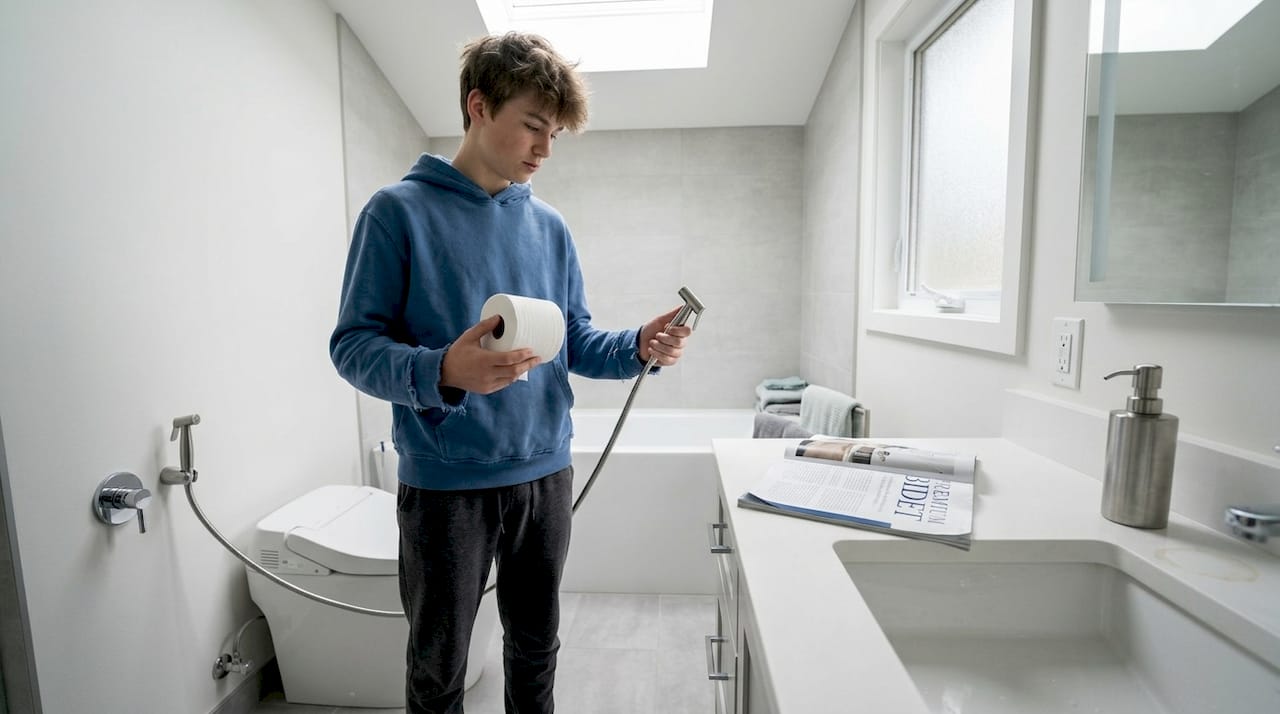
Flushing toilet paper also strains municipal water systems and septic tanks. Toilet paper doesn’t dissolve instantly, requiring extra water volume to transport it through pipes. Bidets leave no solid waste beyond what your body produces naturally, reducing the load on plumbing infrastructure. This efficiency matters especially in areas facing water scarcity or drought restrictions.
| Cleaning Method | Water per Use | Annual Water (1 person) | Hidden Manufacturing Water |
|---|---|---|---|
| Bidet cleaning | 0.125 to 0.25 gallons | 45 to 90 gallons | None |
| Toilet paper + flush | 1.6+ gallons per flush | 1,170+ gallons | 13,140 gallons (for 365 rolls) |
| Bidet + minimal paper | 0.25 + 0.8 gallons | 380 gallons | 3,285 gallons (for 90 rolls) |
The environmental benefits extend beyond water savings:
- Reduced deforestation from lower paper demand preserves watersheds and ecosystems
- Less chemical processing means fewer pollutants entering water supplies
- Decreased transportation emissions from manufacturing and shipping toilet paper
- Lower energy consumption in paper mills and processing facilities
Switching to a bidet versus relying on toilet paper transforms your bathroom from a major resource consumer into an efficient, eco-friendly space that aligns with sustainable living principles.
Water efficiency considerations when choosing a bidet
Different bidet types vary significantly in water usage and efficiency. Electric bidet seats with built-in heaters and spray controls offer the most precise water management. Tankless models heat water instantly as it flows, eliminating the standby energy loss of tank-style heaters while providing unlimited warm water for cleaning. This on-demand approach means you use exactly what you need without waste.
Tankless bidet seats provide improved efficiency and cost savings over time compared to models with water reservoirs. Tank-style seats must keep water heated continuously, consuming energy even when not in use. The water can cool between uses, requiring reheating cycles that waste both water and electricity. Tankless technology solves this by heating only during active cleaning, matching water temperature to your preference instantly.
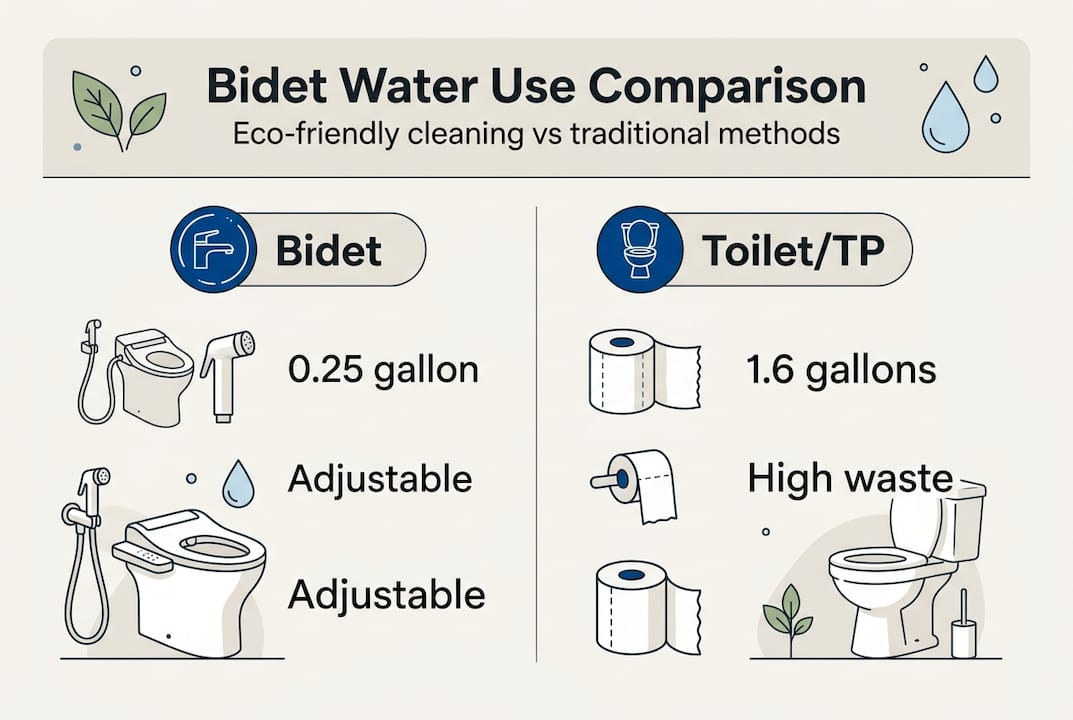
Adjustable settings on quality bidets optimize water use according to individual needs and preferences. Pressure controls let you dial in the exact force required for comfortable, effective cleaning. Duration settings prevent overuse by automatically stopping spray after a preset time. Nozzle position adjustments ensure the water hits exactly where needed, reducing the temptation to extend cleaning time.
Key features that improve water efficiency and hygiene:
- Self-cleaning nozzles that rinse before and after use with minimal water
- Pulsating or oscillating spray patterns that clean more effectively with less water
- Eco modes that reduce flow rate while maintaining cleaning power
- Warm air dryers that eliminate the need for toilet paper entirely
- Soft-close seats and lids that indicate quality construction and longevity
Handheld bidet sprayers offer flexibility but require user discipline. Without automatic shutoff, it’s easy to use more water than necessary. They work well for budget-conscious buyers willing to develop efficient usage habits. Non-electric attachments provide cold water cleaning with extremely low flow rates, making them the most water-efficient option, though comfort may be reduced.
Pro Tip: Regular maintenance keeps your bidet running efficiently without leaks or excess water use. Check connection points monthly for drips, clean nozzles to prevent clogs that increase water pressure needs, and test pressure settings seasonally to ensure optimal performance as water supply pressure changes.
Your household size and usage patterns should guide model selection. Families benefit from durable electric seats with user presets that prevent constant adjustment. Single users or couples might prefer simpler attachments. Consider your local water costs and environmental priorities when weighing features against price.
Additional benefits and environmental impact of switching to bidets
Bidets improve hygiene significantly while reducing environmental impact compared to relying solely on toilet paper. Water cleaning removes bacteria and residue more thoroughly than wiping alone, reducing infection risks and supporting better health outcomes. This superior cleaning matters especially for people with mobility limitations, sensitive skin conditions, or those recovering from surgery.
Top benefits of switching to bidet use:
- Enhanced personal hygiene through gentle water cleaning that removes more waste than paper
- Reduced skin irritation and inflammation from eliminating abrasive wiping
- Better outcomes for hemorrhoid sufferers and postpartum recovery
- Significant environmental footprint reduction through lower paper consumption
- Long-term cost savings from eliminating ongoing toilet paper purchases
- Increased home value and appeal to eco-conscious buyers
Bidets reduce the need for excessive toilet paper usage, directly lowering deforestation rates and landfill waste. Americans use over 7 billion rolls of toilet paper annually, representing millions of trees. Each tree felled disrupts ecosystems, reduces carbon sequestration, and requires replacement growth that takes decades. By cutting paper use by 75% or more, bidet users make a measurable environmental contribution.
Switching to a bidet represents one of the simplest yet most impactful changes homeowners can make for both personal wellness and environmental stewardship. The combination of superior hygiene, reduced resource consumption, and long-term savings makes bidets an essential component of sustainable modern living.
Improved hygiene prevents infections and supports sensitive skin by eliminating the friction and chemical exposure from toilet paper. Many papers contain fragrances, dyes, and bleaching agents that irritate delicate tissue. Water cleaning is naturally gentle and hypoallergenic. People with conditions like eczema, psoriasis, or recurrent infections often experience dramatic improvement after switching.
The holistic view of bidets as part of sustainable living extends beyond the bathroom. Reducing paper consumption decreases demand for industrial forestry, chemical processing, and long-distance shipping. Municipal water treatment facilities process less solid waste. Your carbon footprint shrinks. These cumulative effects multiply across millions of households, creating significant positive environmental impact from a single bathroom upgrade decision.
Explore eco-friendly bidet options at Premium Bidet
Premium Bidet offers a curated selection of water-efficient models proven to save water and boost hygiene for North American homeowners. Our bidet toilet seats feature adjustable pressure controls, tankless heating, and eco modes that maximize efficiency without sacrificing comfort. Each model is selected for durability, performance, and environmental responsibility.
Explore our bidet toilet combo options for a complete eco-friendly bathroom transformation in one integrated unit. These smart toilets combine optimized flushing systems with advanced bidet functions, delivering the ultimate in water conservation and modern convenience. For homeowners ready to upgrade, the Bliss BB 2000 bidet seat offers premium features with exceptional water efficiency and user-friendly controls that make sustainable living effortless.
Frequently asked questions
Are bidets really better for water conservation?
Yes, bidets use substantially less water than the combined footprint of toilet paper manufacturing and the extra flushing required to clear paper waste. While a bidet uses 0.125 to 0.25 gallons per cleaning, producing the toilet paper for a single bathroom visit consumes over 37 gallons in manufacturing alone. When you add the 1.6+ gallons per flush needed to clear paper, bidets emerge as the clear winner for conservation. Model selection and mindful usage patterns optimize these savings further, but even basic bidet use dramatically reduces household water consumption compared to paper-only cleaning.
How does bidet water usage compare to toilet flushing?
Bidets typically use less than 0.25 gallons per cleaning session, while standard toilet flushes consume 1.6 gallons or more. This means a single flush uses six to twelve times more water than a complete bidet cleaning. Bidets supplement rather than replace flushing for solid waste, but they eliminate the need for multiple flushes to clear toilet paper. Comparing bidet water use to toilet flushing shows that the cleaning function itself is remarkably efficient, using only what’s necessary for thorough hygiene.
Can installing a bidet reduce household water bills?
Installing a bidet can modestly reduce water bills by eliminating extra flushes needed to clear toilet paper and reducing overall bathroom water consumption. The savings vary based on household size, local water rates, and previous toilet paper usage patterns. Families that previously flushed multiple times per bathroom visit see the most significant reductions. Tankless bidet seats maximize water savings by heating water on demand without standby energy loss. While water bill savings alone might not offset the initial bidet cost immediately, the combination of lower water use, eliminated toilet paper expenses, and environmental benefits creates compelling long-term value.
What maintenance is needed to keep a bidet water-efficient?
Regular cleaning and prompt leak repairs preserve water efficiency and extend your bidet’s lifespan. Check connection points monthly for drips or moisture that indicate leaks wasting water. Clean nozzles every few weeks to prevent mineral buildup that can increase pressure requirements or cause uneven spray patterns. Adjust settings responsibly, using only the pressure and duration needed for comfortable cleaning. Most quality bidets require minimal maintenance beyond these simple steps, but addressing small issues quickly prevents them from becoming water-wasting problems that impact efficiency and performance.
Recommended
- Eco-Friendly Clean: Discover Bidet Water Savings– Smart Toilets & Bidet Seats | Premium Bidet
- How Much Water Does a Use Compared to Toilets? - Smart Toilets &– Smart Toilets & Bidet Seats | Premium Bidet
- How to Use a Bidet: A Complete Guide for Optimal Hygiene - Smart– Smart Toilets & Bidet Seats | Premium Bidet
- Bidet vs Toilet Paper: Which Is Better for the Environment? | Premium Bidet– Smart Toilets & Bidet Seats | Premium Bidet
Leave a comment