

Explore All Blogs | Insights on Smart Toilets & Bidets
Water-saving bathroom ideas for eco-friendly homes
Choosing the right water-saving bathroom upgrades can feel overwhelming when you want to balance efficiency, hygiene, and comfort. Homeowners committed to sustainability need practical guidance to evaluate fixtures that deliver real environmental and cost benefits without sacrificing performance. This article walks you through essential criteria for selecting water-saving solutions, compares popular options like dual-flush versus single-flush toilets, and explores behavioral factors that maximize your investment. You’ll discover how to create an eco-friendly bathroom that reduces water consumption while enhancing your daily comfort and wellness.
Table of Contents
- Key takeaways
- Criteria for choosing water-saving bathroom upgrades
- Top water-saving bathroom upgrades
- Comparison of single-flush vs dual-flush toilets and other water-saving fixtures
- Additional water-saving tips and behavioral considerations
- Upgrade your bathroom with smart bidet and efficient fixtures
- FAQ
Key Takeaways
| Point | Details |
|---|---|
| WaterSense verified savings | WaterSense certified fixtures reliably reduce water use by at least 20 percent while maintaining strong performance. |
| Leak detection first | Fixing existing leaks before upgrading fixtures boosts overall water savings and prevents masking waste. |
| Touchless faucet benefits | Sensor activated faucets reduce germ transmission and prevent water waste in shared bathrooms. |
| Balance comfort and savings | Test flow and pressure to ensure performance remains comfortable while achieving lower water use. |
| High efficiency toilets | WaterSense toilets use about 1.28 gallons per flush or less, delivering substantial annual savings for families. |
Criteria for choosing water-saving bathroom upgrades
Selecting effective water-saving fixtures requires evaluating several critical factors beyond simple water reduction claims. Efficiency should be your starting point, with WaterSense certified products providing verified performance standards that ensure reliable savings. These fixtures undergo rigorous testing to confirm they use at least 20% less water than standard models while maintaining excellent functionality.
Leak detection deserves immediate attention before investing in new fixtures. Research shows that 10% of homes cause 58% of leaks, wasting thousands of gallons annually through hidden drips and faulty seals. Addressing existing leaks first maximizes the impact of your upgrade investments and prevents new fixtures from masking ongoing waste.
Durability and maintenance requirements vary significantly across water-saving options. Some high-efficiency toilets feature complex dual-flush mechanisms that save more water but require more frequent servicing. Others use simpler single-flush designs with fewer moving parts and lower long-term maintenance costs. Consider your household’s tolerance for repairs and your budget for ongoing upkeep when comparing models.
Hygiene benefits extend beyond water savings, particularly with touchless faucet technology. These sensor-activated fixtures eliminate the need to touch handles with dirty hands, reducing germ transmission in family bathrooms. They also prevent water waste from faucets left running during handwashing or tooth brushing. For households prioritizing both cleanliness and conservation, touchless options deliver dual value.
Comfort and performance must balance with water reduction goals. Flow rates affect shower pressure and faucet functionality, so testing fixtures before purchase helps ensure satisfaction. Look for models with pressure-compensating technology that maintains consistent performance across varying water pressures. Reading user reviews from homeowners with similar plumbing systems provides realistic expectations about daily use.
Pro Tip: Start your water-saving journey by checking for leaks using your water meter. Turn off all water sources in your home, then check if the meter continues moving. Any movement indicates a leak that should be fixed before upgrading fixtures. This simple test can reveal hidden waste costing you hundreds annually.
Exploring eco bathroom trends in the U.S. reveals how homeowners increasingly prioritize sustainability alongside comfort. Modern water-saving fixtures now offer features that previous generations lacked, making efficiency upgrades more appealing than ever. Smart technology integration allows you to monitor usage patterns and identify opportunities for additional savings.
Top water-saving bathroom upgrades
High-efficiency toilets represent the most impactful single upgrade for household water conservation. Traditional toilets use 3.5 to 7 gallons per flush, while EPA WaterSense certified models use 1.28 gallons or less without compromising flushing power. A family of four can save approximately 16,000 gallons annually by replacing one old toilet with a WaterSense certified model. These toilets undergo independent testing to verify they meet strict performance criteria, including the ability to remove 350 grams of waste in a single flush.
Low-flow showerheads limit water flow to 2.0 gallons per minute or less compared to standard 2.5 gallon models. Modern designs use air injection technology to maintain satisfying pressure while reducing volume. Some premium models offer multiple spray patterns, allowing you to customize your shower experience without sacrificing efficiency. Installation takes minutes with basic tools, making this one of the easiest upgrades to implement.
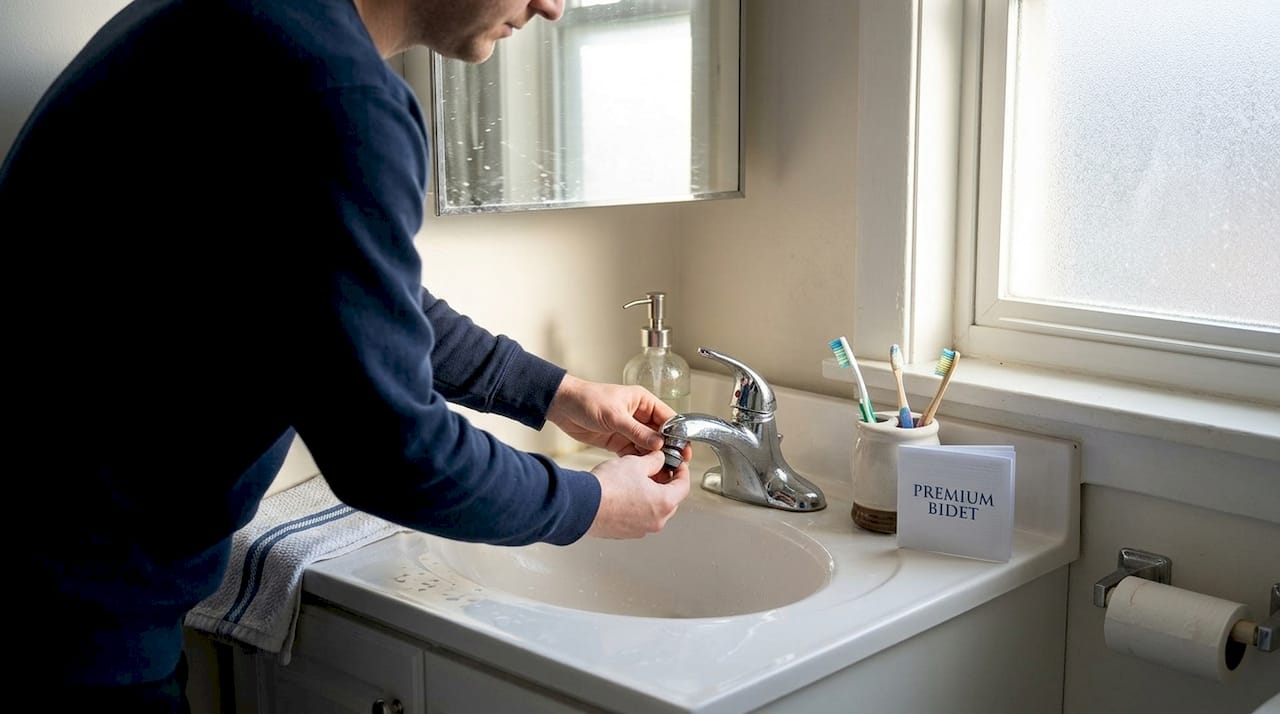
Faucet aerators and touchless faucets provide substantial savings in bathroom sinks. Simple screw-on aerators cost under $10 and reduce flow by mixing air with water, cutting consumption by up to 30% with no noticeable performance change. Touchless sensor faucets take savings further by eliminating water waste during handwashing, reducing usage by 30 to 54% through precise flow control. These fixtures also enhance hygiene by eliminating the need to touch contaminated handles.
Dual-flush toilets offer two flush options: a reduced volume for liquid waste and a full flush for solid waste. The partial flush typically uses 0.8 to 1.0 gallons while the full flush uses 1.6 gallons. This flexibility can save up to 13,000 gallons per household annually compared to standard single-flush toilets. However, the more complex mechanism requires additional maintenance, which we’ll explore in the comparison section.
Pro Tip: When replacing multiple fixtures, prioritize based on usage frequency and current efficiency. Toilets account for nearly 30% of household water use, making them the best starting point. Follow with showerheads if your household takes long showers, then upgrade faucets and consider bidet toilet combos that eliminate toilet paper while providing superior hygiene.
Combining multiple fixture upgrades amplifies your water savings significantly. A household that replaces an old toilet, installs low-flow showerheads, and adds faucet aerators can reduce annual water consumption by 16,000 to 20,000 gallons. This translates to lower utility bills and a smaller environmental footprint. The cumulative effect makes comprehensive bathroom upgrades more cost-effective than piecemeal improvements over time.
- High-efficiency toilets deliver the largest single-fixture water savings
- Low-flow showerheads maintain comfort while cutting shower water use
- Faucet aerators provide the lowest-cost immediate reduction option
- Touchless faucets combine water savings with improved hygiene
- Dual-flush toilets offer flexibility but require more maintenance consideration
Comparison of single-flush vs dual-flush toilets and other water-saving fixtures
Understanding the trade-offs between toilet types helps you select the best option for your household priorities and budget. Single-flush toilets use one flush volume for all waste, typically 1.28 gallons for WaterSense certified models. Their simpler mechanism features fewer moving parts, resulting in greater reliability and lower maintenance costs over the fixture’s lifespan. Dual-flush models save 13,000 gallons annually but incur 40 to 60% higher maintenance expenses due to their more complex flush valve systems.
| Feature | Single-Flush Toilet | Dual-Flush Toilet | Low-Flow Showerhead | Touchless Faucet |
|---|---|---|---|---|
| Water Savings | 16,000 gal/year | 13,000-20,000 gal/year | 4.5 gal/person/day | 30-54% reduction |
| Installation Cost | $200-500 | $300-700 | $15-150 | $150-400 |
| Maintenance | Low | Moderate to High | Minimal | Low to Moderate |
| Reliability | High | Moderate | High | High |
| Best For | Simplicity seekers | Max water savings | Quick upgrades | Hygiene priority |
Performance standards ensure both toilet types deliver effective waste removal. WaterSense certification requires toilets to achieve a Minimum Average Performance score of 350 grams or higher, meaning they successfully remove at least 350 grams of solid waste in independent testing. Both single-flush and dual-flush models can meet this standard, so your choice depends more on maintenance tolerance and usage patterns than flushing capability.
Low-flow showerheads vary in design approach and resulting user experience. Aerating models mix air into the water stream, creating a softer, mist-like spray that some users find less satisfying. Laminar-flow models maintain separate water streams without air injection, providing a more traditional shower feel with slightly less efficiency. Testing different styles helps identify which technology suits your preferences while achieving water reduction goals.
Faucet options range from simple retrofit aerators to sophisticated touchless systems. Aerators represent the most budget-friendly choice, requiring no plumbing changes and delivering immediate 30% savings. Touchless faucets cost more upfront but provide superior hygiene benefits in family bathrooms where multiple people share fixtures. Battery-operated models offer easier installation than hardwired versions, though they require periodic battery replacement.
Pro Tip: Calculate your payback period before choosing between single-flush and dual-flush toilets. Divide the price difference by your estimated annual water bill savings. If the dual-flush model costs $200 more but saves $40 annually, the payback period is five years. Factor in the higher maintenance costs to determine if the investment makes financial sense for your situation.
Budget considerations extend beyond purchase price to include installation and long-term operating costs. Professional installation for toilets typically adds $150 to $300, while showerheads and aerators are simple DIY projects. Touchless faucets may require electrical work if you choose hardwired models. Evaluate total cost of ownership over 10 to 15 years rather than focusing solely on initial purchase price.
- Single-flush toilets offer simplicity and reliability with lower maintenance
- Dual-flush models maximize water savings but increase complexity
- WaterSense certification ensures performance regardless of toilet type
- Low-flow showerheads vary in spray technology and user experience
- Budget and lifestyle preferences determine the best fixture combination
Additional water-saving tips and behavioral considerations
Proper calibration of touchless faucets prevents unintended water waste from overly sensitive sensors. Sensor timing affects efficiency significantly, with some models activating too quickly or staying on too long after hands move away. Most touchless faucets include adjustment screws or digital controls to fine-tune detection range and shutoff delay. Spending 10 minutes optimizing these settings can increase your water savings by 20% or more.
Shower duration directly impacts the effectiveness of low-flow showerhead upgrades. Some households unconsciously extend shower time when water pressure feels gentler, partially offsetting the fixture’s efficiency gains. Setting a timer or playing a specific song can help maintain consistent shower lengths. Even a one-minute reduction per person daily saves approximately 730 gallons annually in a four-person household.
Retrofit faucet aerators provide immediate low-cost savings as a starting point for water conservation. These simple devices screw onto existing faucet spouts in seconds, requiring no tools or plumbing knowledge. They cost $5 to $15 each and reduce flow from 2.2 gallons per minute to 1.5 or even 1.0 gallons per minute. Installing aerators throughout your home while you research larger upgrades delivers instant results and builds momentum for your conservation efforts.
Leak detection and repair remain critical for realizing full water-saving potential. A toilet with a worn flapper valve can waste 200 gallons daily, completely negating the benefits of low-flow fixtures elsewhere. Check toilets by adding food coloring to the tank and watching for color in the bowl without flushing. Dripping faucets should be repaired immediately, as even slow drips waste thousands of gallons yearly. Regular inspection prevents small issues from becoming major water and money drains.
“The most efficient fixture in the world can’t compensate for behavioral waste. Combining smart technology with conscious water use habits delivers the greatest environmental and financial benefits for eco-focused homeowners.”
Behavioral changes amplify fixture upgrades through daily habits that reduce unnecessary consumption. Turning off faucets while brushing teeth or soaping hands seems minor but saves 8 gallons per person daily. Collecting shower warmup water in a bucket for plants or cleaning prevents waste while your shower reaches temperature. These small actions compound over time, especially when combined with efficient fixtures.
Pro Tip: Create a water-saving checklist for your household that combines fixture upgrades with behavioral changes. Include items like checking for leaks monthly, timing showers, and turning off taps during tasks. Review the list quarterly to identify new opportunities and celebrate progress. Engaging family members in conservation efforts through friendly competitions or shared goals increases participation and results.
Exploring the benefits of eco-conscious bathrooms reveals how water savings connect to broader sustainability goals. Reduced water consumption lowers energy use for heating and treatment, multiplying your environmental impact. Modern fixtures also tend to be more durable, reducing replacement frequency and associated manufacturing impacts. Viewing your bathroom as an integrated system rather than isolated fixtures helps identify optimization opportunities.
- Calibrate touchless faucet sensors to prevent waste from poor settings
- Monitor and maintain consistent shower duration for maximum savings
- Start with retrofit aerators for quick, low-cost water reduction
- Check and repair leaks regularly to prevent hidden waste
- Combine fixture upgrades with behavioral changes for best results
Upgrade your bathroom with smart bidet and efficient fixtures
Transforming your bathroom into an eco-friendly space becomes easier when you explore solutions that combine water savings with enhanced comfort and hygiene. Premium Bidet offers a curated selection of bidet toilet seats and bidet toilet combos designed to reduce toilet paper consumption while providing superior cleansing. These fixtures align perfectly with the water-saving principles discussed throughout this article, using precise water delivery to minimize waste.
Smart toilet technology integrates multiple efficiency features into single fixtures, simplifying your upgrade process. Many models include dual-flush capability, heated seats, and customizable bidet functions that enhance daily comfort while supporting conservation goals. Exploring smart toilet technology helps you understand how these advanced features work together to deliver both luxury and sustainability. Premium Bidet’s U.S.-based customer support team can guide you through product selection based on your specific bathroom layout, household needs, and water-saving objectives.
FAQ
Are water-saving toilets as effective as standard models?
Yes, water-efficient toilets perform as well or better than older high-volume models according to independent testing. WaterSense certified toilets must remove 350 grams of waste in a single flush, ensuring reliable performance while using 20% less water. Many homeowners report improved flushing power after upgrading from decades-old toilets to modern efficient models.
What maintenance is required for dual-flush toilets?
Dual-flush mechanisms require 40 to 60% more maintenance than single-flush models due to additional moving parts in the valve system. You may need to replace flush buttons, seals, or valve components every few years depending on water quality and usage frequency. However, the substantial water savings often justify these higher maintenance costs over the toilet’s 15 to 20 year lifespan.
How much water can I save by installing low-flow showerheads?
Low-flow showerheads save approximately 4.5 gallons per person daily compared to standard 2.5 gallon per minute models. A four-person household saves around 6,500 gallons annually from this single upgrade. Maintaining consistent shower duration maximizes these savings, as some users unconsciously shower longer when water pressure feels gentler.
Are touchless faucets better for hygiene and water savings?
Touchless faucets reduce water use by 30 to 54% through sensor-controlled flow that eliminates waste during handwashing. They also significantly improve hygiene by removing the need to touch contaminated handles with dirty hands, reducing germ transmission in shared bathrooms. Proper sensor calibration ensures optimal performance and prevents unintended activation that could waste water.
Recommended
- Eco Bathroom Trends 2025: How Americans Are Going Green at Home– Smart Toilets & Bidet Seats | Premium Bidet
- Advantages of eco-conscious bathrooms in 2026– Smart Toilets & Bidet Seats | Premium Bidet
- How Much Water Does a Use Compared to Toilets? - Smart Toilets &– Smart Toilets & Bidet Seats | Premium Bidet
- Tankless Bidet Seat Advantages: Key Benefits for Bathroom Upgrades– Smart Toilets & Bidet Seats | Premium Bidet
- Increasing KWH Cost: Here we give you 7 tips to save energy | LED Supply & Fit
- 7 Key Sustainable Building Practices 2026 for Managers
Leave a comment